
When it comes to protecting people from pathogens and other workplace hazards, not all control measures are created equal. The Hierarchy of Controls is a systematic approach that prioritizes the most effective strategies for preventing exposure to hazards, including infectious agents.
What is the Hierarchy of Controls?
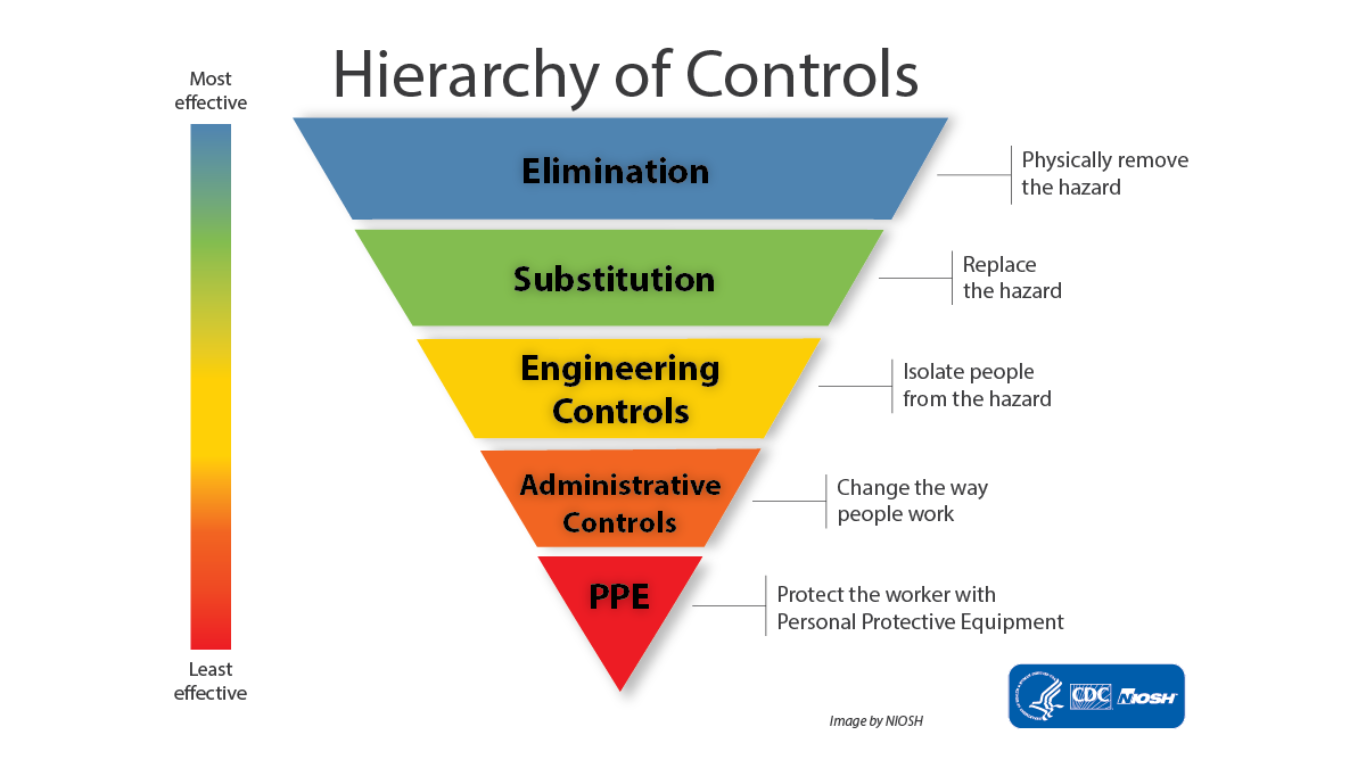
The Hierarchy of Controls is a framework used by safety professionals to implement effective control solutions. Developed by the National Institute for Occupational Safety and Health (NIOSH), this approach organizes hazard control strategies from most to least effective:
- Elimination – Physically remove the hazard
- Substitution – Replace the hazard
- Engineering Controls – Isolate people from the hazard
- Administrative Controls – Change the way people work
- Personal Protective Equipment (PPE) – Protect the worker with PPE
Most Effective: Elimination and Substitution
At the top of the hierarchy are the most effective control measures:
- Elimination involves completely removing the hazard from the workplace. For pathogens, this might mean identifying and removing infected individuals from the environment or eliminating conditions that allow pathogens to survive.
- Substitution replaces a hazard with a less dangerous alternative. While challenging to apply directly to pathogens, it might involve replacing high-risk procedures with safer alternatives that achieve the same outcome.
Engineering Controls
Engineering controls are physical changes to the workplace that isolate people from hazards. These are particularly valuable for pathogen control and include:
- Advanced Disinfection Technologies
- Negative pressure rooms for airborne pathogens
- High-efficiency air filtration systems
- Physical barriers like sneeze guards
- Proper ventilation to reduce airborne transmission
Administrative Controls
Administrative controls change the way people work to reduce exposure:
- Developing policies for sick leave and remote work
- Implementing hygiene protocols
- Creating cleaning and disinfection schedules
- Training employees on infection prevention
- Adjusting work schedules to reduce crowding
Least Effective: Personal Protective Equipment
At the bottom of the hierarchy is PPE, which includes:
- Respirators and face masks
- Gloves
- Face shields
- Gowns and protective clothing
While essential, PPE is considered the last line of defense because it relies on proper use by individuals and doesn’t eliminate the hazard at its source.
Why The Hierarchy of Controls Works
The Hierarchy of Controls provides a structured method for addressing pathogen risks. By focusing on elimination and engineering controls first, organizations can implement more reliable protections before resorting to measures that depend on individual compliance.
For effective pathogen management, the best approach usually combines multiple controls across different levels of the hierarchy, creating layers of protection against infectious disease transmission.
To learn more, check out the information at the source – The CDC.